

Zaha Hadid, architect of MSU’s Broad Art Museum, passes away
A tribute to her groundbreaking designs and powerful legacy
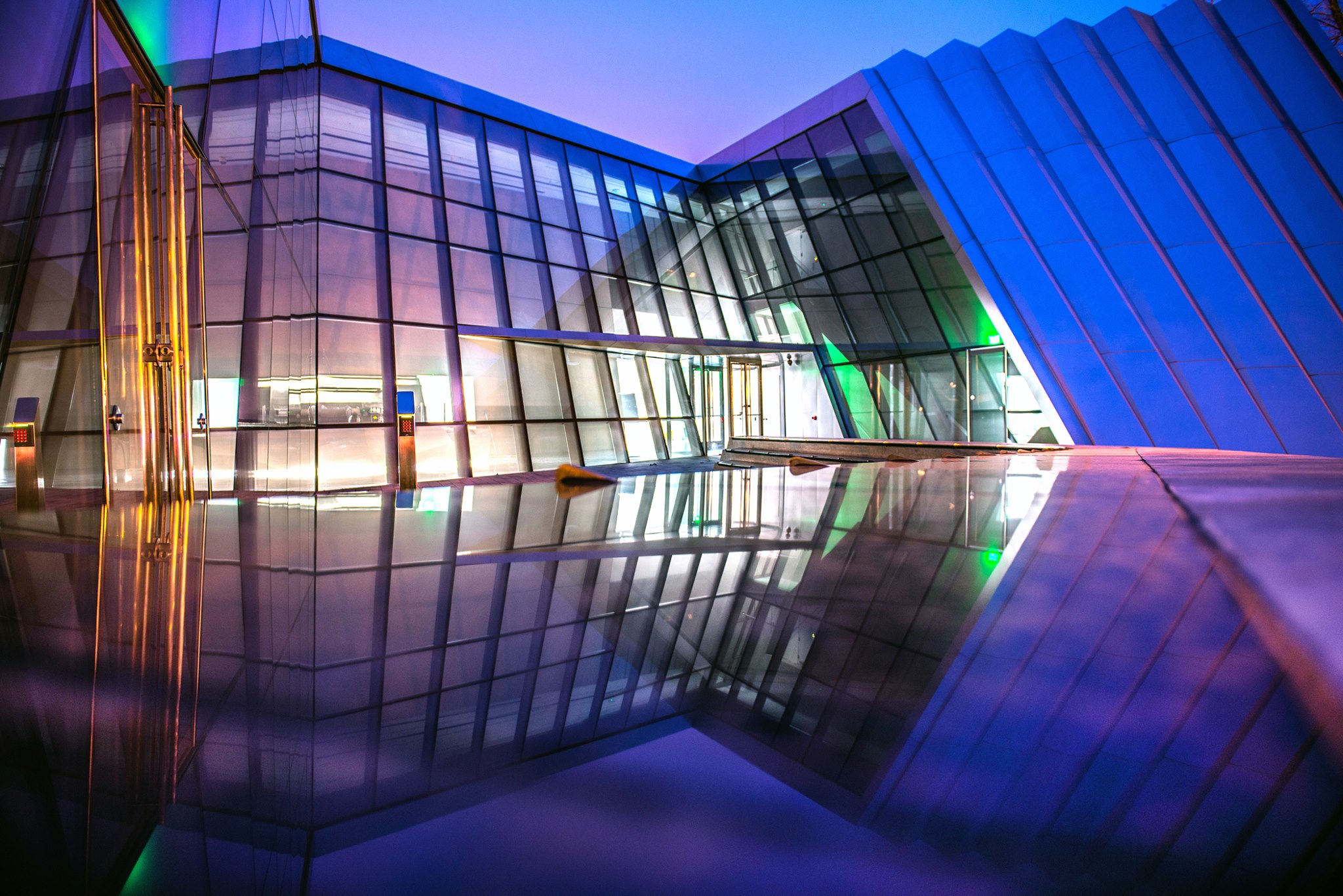
The Eli and Edythe Broad Art Museum by Zaha Hadid Architects (Photo: Michigan State University, Facebook)
Regardless of how much you know about it, there is no doubt that the giant, metallic, spaceship-like exterior of MSU’s Broad Art Museum has caught your eye at least a few times. MSU students and other visitors who have made their way inside since its 2012 opening have been able to experience a one-of-a-kind art museum with an interior that is arguably even more spectacular and convention-defying than its exterior.
If you have not visited this jewel of MSU, you absolutely need to—and not just because the Broad is an incredible work of art itself, but because the Iraqi-British woman behind its genius design is largely considered to be one of the greatest female architects of all time.
Also, because she has sadly just passed away.
Zaha Hadid’s death last Thursday sent the architectural world into mourning. Here’s what you need to know about this amazing pioneer of modern design, if you didn’t already.
Portrait of Zaha Hadid by Brigitte Lacombe (Photo courtesy of ZHA Press)
Zaha Hadid was born in Baghdad in 1950. She first studied at the American University of Beirut for mathematics, then at the Architectural Association School in London. By 1979, she had established her own architectural practice.
Zaha Hadid Architects (ZHA) is based in London, where she worked (and won a huge number of competitions) for more than 40 years. Even in the early years of her practice, Hadid’s incredible theoretical works attracted the attention of the world. These works included:
- The Peak in Hong Kong (1983)
- Kurfürstendamm in Berlin (1986)
- Cardiff Bay Opera House in Wales (1994)
International fame for Hadid was solidified with the commission of the Vitra Fire Station in Weil Am Rhein, Germany in 1993. Her bold quest to break the common narratives of design continued to earn her praise from all over the globe.
More of her notable projects include:
- the MAXXI: Italian National Museum of 21st Century Arts in Rome (2009)
- London Aquatics Centre for the 2012 Olympic Games (2011)
- Heydar Aliyev Centre in Baku (2013)
- Rosenthal Center for Contemporary Art in Cincinnati (2003)
- Guangzhou Opera House in China (2010)
- Riverside Museum in Glasgow (2011)
- Eli and Edythe Broad Art Museum in East Lansing (2012) (!)
(Photo: Zaha Hadid Architects, Facebook)
Zaha Hadid had this to say of our very own Broad:
“Cultural engagement is paramount. The design of the Broad invites dialogue with the university, the community of East Lansing and beyond.”
A whole list of her architectural works can be found here.
Architecture aside, Hadid was also known for her impeccable sense of fashion. She was always incredibly stylish, with an eye for the cutting-edge.
Hadid never let a brand or style stand for her; only she stood for herself. (Photo: Zaha Hadid Architects, Facebook)
She chose to follow her own trends, carving out her own unique path through artistic expression. In fact, Hadid made the Guardian‘s “50 Best-Dressed over 50” list in 2013.
In short, Zaha Hadid was a total badass.
Eventually, this eye for style translated into designing jewelry and shoes. These designs share the concepts and forms of her architecture, condensing the ideas behind her magnificent structures into smaller, more tangible versions that can be worn and carried around.
Art you can wear: stirling silver cuff by Zaha Hadid for Georg Jensen (Photo: Zaha Hadid, Facebook)
Flames by Zaha Hadid, created solely using 3D printing (Photo: Zaha Hadid, Facebook)
When she was awarded with the Pritzker Architecture Prize in 2004, Hadid broke barriers by becoming the first woman and the first Muslim to do so. This was especially monumental because the Pritzker Prize is widely considered to be the highest honor in architecture.
She also won the UK’s prestigious RIBA Stirling Prize, twice; once for the MAXXI Museum in Rome, and a second time for the Evelyn Grace Academy.
Additionally, she was the recipient of the Republic of France’s Commandeur de l’Ordre des Arts et des Lettres, Japan’s Praemium Imperiale, the Jane Drew Prize, and was the first woman to be awarded the RIBA’s 2016 Royal Gold Medal.
In 2012, Hadid was awarded the title Dame Commander of the Order of the British Empire (DBE) by the Queen.
Now that she is gone, Dame Zaha Hadid stands among the likes of Frank Lloyd Wright, Le Corbusier, Antonio Gaudi, Ludwig Mies van der Rohe, and other legends of architecture who remain immortal through their lasting influence on architecture and design.
To me, Hadid’s visionary work has proven that there is no limit to the brilliance of human imagination. Her bold quest for creativity should be an inspiration to us all.
With all this being said, our campus is home to a true treasure with the Eli and Edythe Broad Art Museum. Zaha Hadid’s accomplishments have made our world a little more beautiful, and we are lucky to have our campus adorned with a physical testament to her unique brand of creativity.
So, before this semester is over, take a few hours out of your day to visit and appreciate the Broad for what it is and what it represents.
It’s worth it, I promise.
Hadid passed away March 31, 2016. She was 64.
Rest in Power.