

Bad banker degree kicked into long grass
The University’s recent decision to allow Fred Goodwin to hold on to his honorary doctorate has been seen as controversial not just in Students’ Association, but also across the UK. […]
The University’s recent decision to allow Fred Goodwin to hold on to his honorary doctorate has been seen as controversial not just in Students’ Association, but also across the UK.
In 2002, Forbes magazine named the bad banker ‘Businessman of the Year’. He has featured in Scotland on Sunday’s ‘Power 100’ and in 2004, he received a knighthood for ‘services to banking’, the same year he was awarded an honorary doctorate of laws by the University of St Andrews. Yet just 8 years later, he was placed on Time Magazine’s list of the ‘25 people to Blame for the Financial Crisis’. So where did it all go wrong for Fred ‘The Shred’ Goodwin?
Mr Goodwin (he lost the ‘Sir’ last week) was born and bred in Scotland. Raised in Paisley, he then went on to study law at the University of Glasgow. After qualifying as a chartered accountant, Fred held positions at banks across the world, gaining the nickname ‘Fred the Shred’ for his ruthless approach to cost savings. In 1998, Goodwin joined The Royal Bank of Scotland, quickly succeeding Sir George Mathewson as CEO.
Goodwin subsequently received a knighthood in 2004, for his service to banking in the United Kingdom. On 1st February 2012, his knighthood was revoked, with the Cabinet Office recognising that “widespread concern about Fred Goodwin’s decisions meant that the retention of a Knighthood for ‘services to banking’ could not be sustained”. Prior to the financial crisis of 2008, Goodwin had been attempting to transform and expand RBS with takeover after takeover, stretching RBS’s capital reserves to breaking point. Decisions made by Mr Goodwin led to a grand total of £45.5bn of taxpayers’ money being pumped into RBS to ensure its survival.
After Goodwin’s ‘Sir’ was very publicly removed, many began to question how long Goodwin would hold on to his honorary doctorate from St Andrews. The answer: he’s keeping it. Despite calls from the Students’ Association to revoke the degree, the University announced that Mr Goodwin will be holding on to his doctorate. Speaking of this controversial decision, a spokeswoman said, “The University is sensitive to the varied opinions expressed about Mr Goodwin’s part in the collapse of RBS and its damaging effects on the economy and the lives of many thousands of people. Revoking the degree, however, cannot change history, nor ameliorate the harm done by the banking collapse.”

RAAC: The first instances of dangerous concrete have been identified at these UK universities
 Emily Smith
St Andrews Student Union Club will be closed for Freshers’ Week

Prospective St Andrew’s University student killed by his uncle in knife attack
 Francesca Eke
21-year-old William Fraser suffered 20 stab wounds

 Phoebe Kowhai
St Andrews student went to A&E with headache told he had ‘tennis ball’ sized brain tumour
Rhudi Baume-Kennedy has made a recovery after undergoing multiple surgeries

Will and Kate are hosting an exclusive viewing party of The Crown for St Andrews students
A student from each course at the university will be chosen at random

Omg, filming for the new season of The Crown is happening right now on St Andrews’ campus
75 per cent of my personality trait is being able to say I’m mature enough to watch The Crown x

Over 10,000 Scottish students denied university accommodation each year
 Ollie Lewis
‘There must be no repeat of the chaotic scenes that we saw in the autumn’

Put it in your diary: Here are the dates for the 18 days of strikes at University of St Andrews
There’s no point even getting out of bed this term

Confirmed: The first day of strike action at University of St Andrews is in two weeks time
Strikes will begin on February 1st

University of St Andrews staff set to strike for 18 days before Easter
Over 70,000 staff at 150 universities will be striking

St Andrews student called ‘fashion God’ after wearing a bucket hat on University Challenge
Get him to Paris Fashion Week right now

Three St Andrews students have lost £12k total in accommodation scams
 Izzy Schifano
Students have reportedly been conned into paying deposits for housing that doesn’t exist

St Andrews University staff to go on strike for three days this month
Lecturers at every UK uni will be striking


University of St Andrews ranks best in the country in new university league table
 Palmer Sperau
Sorry Oxbridge, St Andrews takes the cake this year

The St Andrews Tab is looking for new writers and we want you!
The best bit is you don’t need any experience

University of St Andrews student died in his sleep whilst on ‘dream holiday’ with friends
Oliver Vaux was described as a ‘kind, compassionate and considerate young man’
St Andrews tops uni league tables, the first time ever a university has beaten Oxbridge
No other UK uni has come first on the Good University Guide in 30 years

Applications for The St Andrews Tab Editorial Team are now open!
 Yazmin Taylor
We’re recruiting for four Editorial positions – it’s fun and it looks great on your CV too!

The University of St Andrews Ice Skating Club helped me overcome my struggles with mental health
 Hannah Haig
Skating was a little ray of sunshine

A dramatic recap of the Whole Zara McDermott and Sam Thompson cheating scandal
 anotherstephen
Remember when she kept posting open love notes on Instagram to him?

Co-star romances and age-gap relationships: All of Paul Hollywood’s biggest controversies
 Lydia Spencer-Elliott
He’s back handing out handshakes on another series of The Great British Bake Off

Boo! These are officially the most haunted UK unis in 2023, based on ghost sightings
There have been 59 ghost sightings at one UK uni

MAFS gossip column: Jordan responds to fight scandal and cast knew each other before the show?!
 Hayley Soen
The drama really never ends!


Tour buses and family dramas: A brief history of One Direction’s run-ins with the law
Liam Payne has just had his driver’s license suspended

‘You’re scared to step outside’: Two women share their stories of being stalked at uni
This doesn’t only happen to celebrities like Holly Willoughby

Another one! People spot a further editing error in MAFS questioning a staged dinner
Nothing is sacred anymore

Um, the video of Georges squatting has been revealed and you absolutely have to watch it
 Ellie Ring
Give this man all the baguettes

Attention pickpocket! The uni cities where you’re most likely to have your phone stolen
I’m switching back to a Nokia brick after this

Meet Lauren Sintes: The 27-year-old model joining the cast of Made in Chelsea
Of course she’s well connected with most of the cast

Rugby boys and the cleaning rota: Just 19 uni things that are none of my business
The hygiene rating of my fave kebab shop has nothing to do with me!

From secret hookups to cheating: All the biggest bombshells from the Love Is Blind reunion
I’m in shock at all of these

Why do posh people sleep with all their mates? A very serious investigation
The Made in Chelsea mayhem has gone on long enough


‘You’ve made a c*** of yourself’: Shona shares off-screen chat that saw Brad axed from MAFS
‘Bradley said he was behaving like a caged animal’

MAFS UK star Chanita Stephenson calls out the current cast for being a ‘bit too wild!’
She thinks they’re on the show ‘for fun’ and are not ‘focusing on their marriages’

‘Go f**k yourself’: Luke calls out ‘snake’ in MAFS cast who ‘sold’ story of him having a fight
It was revealed today Luke has been removed from the show following a physical fight
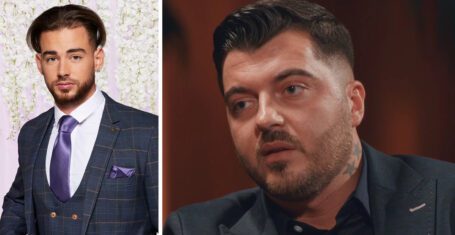
Luke has been AXED from Married at First Sight UK following physical fight with Jordan
The incident was caught on camera