

Downton Abbey Series 3, Episode 6
The women of Downton are rising. Disbelief and anger at Sybil’s (perhaps needless) death soured the traditional reserve of the Crawley family. Cora is holding Robert accountable, and he is […]
The women of Downton are rising.
Disbelief and anger at Sybil’s (perhaps needless) death soured the traditional reserve of the Crawley family. Cora is holding Robert accountable, and he is losing the will to resist her perspective. The others, while still visibly shocked, appear to be making an effort to appear stoic for Tom’s sake.
Grief, as suggested by the Dowager Countess, is tiring indeed, and Fellowes respects the solemnity of the occasion. Crucially, however, he does not let it drag on the episode’s momentum. The footmen are still lobbying for Ivy’s favour; Daisy remains bitter. Mrs Hughes’ liberalism continues to enchant us, and Ethel’s characterisation develops beyond the mechanics of a plot line. The fallen woman rises: she demonstrates wit and personal pride in her persuasion of the hard-boiled Mrs Patmore, and she is sensitive to the situation of the Crawley ‘girls’. The effort she puts into making her pudding is proof of her affection; our appetites are whet for her redemption, and her guests’ appetites are whet for her baking.
The portrayal of Carson and Lord Grantham leans increasingly towards their ‘old guard’ irrelevance. United by fury at any exposure to scandal, they are blinded by dearly held ‘standards’ of behaviour. Robert refuses to consider that his ‘inexperienced’ heir may have a clearer idea of Downton’s (mis)management. Both men attempt to stamp out discussion of religion, their authority betrayed by a somewhat secular appreciation of its importance. Thomas’ and Jimmy’s ‘long words’ – ‘transubstantiation’ and ‘orthodox’ – hint at an intellectualism not necessarily expected from their class. Instead, it is their youth, ambition and avidity that gets them promoted. Their bitterness makes them veil their knowledge in irony, the only way they can undermine the authority of the older Moseley.
The women of Downton, seemingly in honour of Sybil’s nursed passion for suffrage, stand up to the male tradition. Lord Grantham’s ‘performance’ reveals the power of the female gender united. Daisy is presented with the real opportunity to be an independent woman as the future manager of her father-in-law’s farm. In the trailer for the next episode, we see Edith dare to go public with her views in The Sketch; she even reveals an interest in learning to cook and becoming more self-reliant. The Dowager Countess’ handling of Cora and Robert’s conflict reasserts her relevance in the family’s concerns; Maggie Smith matches her character’s usual black humour with an effective sensitivity.
The ultimate respite from mourning comes with Bates’ deliverance. No longer will we be subjected to tiresome prison scenes and the inconclusive, bitter motives of Craig and Mrs Bartlett—somehow, their interferences were never given much of a rationale. Anna is ecstatic, of course. How a world-weary, prison-hardened Bates will settle back into the life at Downton we can only wait and see.
On a more cheerful note this is great, if it’s not already spammed your Facebook feed:
Copyright © 2012 TV Equals

RAAC: The first instances of dangerous concrete have been identified at these UK universities
 Emily Smith
St Andrews Student Union Club will be closed for Freshers’ Week

Prospective St Andrew’s University student killed by his uncle in knife attack
 Francesca Eke
21-year-old William Fraser suffered 20 stab wounds

 Phoebe Kowhai
St Andrews student went to A&E with headache told he had ‘tennis ball’ sized brain tumour
Rhudi Baume-Kennedy has made a recovery after undergoing multiple surgeries

Will and Kate are hosting an exclusive viewing party of The Crown for St Andrews students
A student from each course at the university will be chosen at random

Omg, filming for the new season of The Crown is happening right now on St Andrews’ campus
75 per cent of my personality trait is being able to say I’m mature enough to watch The Crown x

Over 10,000 Scottish students denied university accommodation each year
 Ollie Lewis
‘There must be no repeat of the chaotic scenes that we saw in the autumn’

Put it in your diary: Here are the dates for the 18 days of strikes at University of St Andrews
There’s no point even getting out of bed this term

Confirmed: The first day of strike action at University of St Andrews is in two weeks time
Strikes will begin on February 1st

University of St Andrews staff set to strike for 18 days before Easter
Over 70,000 staff at 150 universities will be striking

St Andrews student called ‘fashion God’ after wearing a bucket hat on University Challenge
Get him to Paris Fashion Week right now

Three St Andrews students have lost £12k total in accommodation scams
 Izzy Schifano
Students have reportedly been conned into paying deposits for housing that doesn’t exist

St Andrews University staff to go on strike for three days this month
Lecturers at every UK uni will be striking


University of St Andrews ranks best in the country in new university league table
 Palmer Sperau
Sorry Oxbridge, St Andrews takes the cake this year

The St Andrews Tab is looking for new writers and we want you!
The best bit is you don’t need any experience

University of St Andrews student died in his sleep whilst on ‘dream holiday’ with friends
Oliver Vaux was described as a ‘kind, compassionate and considerate young man’
St Andrews tops uni league tables, the first time ever a university has beaten Oxbridge
No other UK uni has come first on the Good University Guide in 30 years

Applications for The St Andrews Tab Editorial Team are now open!
 Yazmin Taylor
We’re recruiting for four Editorial positions – it’s fun and it looks great on your CV too!

The University of St Andrews Ice Skating Club helped me overcome my struggles with mental health
 Hannah Haig
Skating was a little ray of sunshine

A dramatic recap of the Whole Zara McDermott and Sam Thompson cheating scandal
 anotherstephen
Remember when she kept posting open love notes on Instagram to him?

Co-star romances and age-gap relationships: All of Paul Hollywood’s biggest controversies
 Lydia Spencer-Elliott
He’s back handing out handshakes on another series of The Great British Bake Off

Boo! These are officially the most haunted UK unis in 2023, based on ghost sightings
There have been 59 ghost sightings at one UK uni

MAFS gossip column: Jordan responds to fight scandal and cast knew each other before the show?!
 Hayley Soen
The drama really never ends!


Tour buses and family dramas: A brief history of One Direction’s run-ins with the law
Liam Payne has just had his driver’s license suspended


‘You’re scared to step outside’: Two women share their stories of being stalked at uni
This doesn’t only happen to celebrities like Holly Willoughby

Another one! People spot a further editing error in MAFS questioning a staged dinner
Nothing is sacred anymore


Um, the video of Georges squatting has been revealed and you absolutely have to watch it
 Ellie Ring
Give this man all the baguettes

Attention pickpocket! The uni cities where you’re most likely to have your phone stolen
I’m switching back to a Nokia brick after this

Meet Lauren Sintes: The 27-year-old model joining the cast of Made in Chelsea
Of course she’s well connected with most of the cast

Rugby boys and the cleaning rota: Just 19 uni things that are none of my business
The hygiene rating of my fave kebab shop has nothing to do with me!

From secret hookups to cheating: All the biggest bombshells from the Love Is Blind reunion
I’m in shock at all of these

Why do posh people sleep with all their mates? A very serious investigation
The Made in Chelsea mayhem has gone on long enough


‘You’ve made a c*** of yourself’: Shona shares off-screen chat that saw Brad axed from MAFS
‘Bradley said he was behaving like a caged animal’

MAFS UK star Chanita Stephenson calls out the current cast for being a ‘bit too wild!’
She thinks they’re on the show ‘for fun’ and are not ‘focusing on their marriages’

‘Go f**k yourself’: Luke calls out ‘snake’ in MAFS cast who ‘sold’ story of him having a fight
It was revealed today Luke has been removed from the show following a physical fight
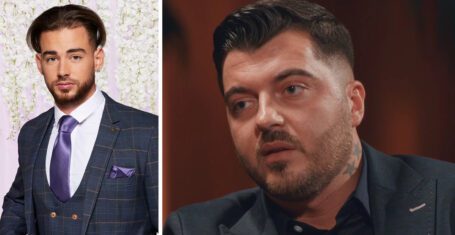
Luke has been AXED from Married at First Sight UK following physical fight with Jordan
The incident was caught on camera