

Cambridgeshire labelled as a coronavirus “Enhanced Response Area”
This is due to a rise in case numbers in the area
 Maddie Angwin
As of Monday (01/11) Cambridgeshire has become a coronavirus “Enhanced Response Area.” The announcement comes in response to the rising number of COVID-19 infections in Cambridgeshire, which totalled 491.5 cases per 100,000 people in the seven days to October 25. With Halloween celebrations underway, there were concerns that the infection rate will rise further.
Cambridgeshire has been granted “Enhanced Response Area” status for at least five weeks due to concerns over the rising number of cases in the elderly population and the pressure this exerts on the NHS, which is already burdened with an increase in winter admittances. The move hopes to reduce the number of potential COVID-related hospitalisations and therefore keep the NHS within its functioning limits.
Local officials aim to use the new status in order to push for more resources, including vaccines, masks and personnel. It entitles Cambridgeshire to additional support in vaccinating 12-15 year olds, particularly in schools with high infection rates, and administering booster vaccinations to eligible groups, particularly those deemed most vulnerable.
A significant effort will also be made to vaccinate in areas where the uptake has so far been slow.
This announcement comes with a plea from the Chair of the Cambridgeshire County Council’s Health Committee to keep getting tested regularly. This is even more important if you are in contact with the elderly or you work in schools that have been infection hotspots since resuming in September.
The message from the Chair is also reflected by Cambridge University’s Vice-Chancellor Stephen J. Toope, who called for students to continue taking part in Cambridge’s asymptomatic testing programme. The push for students to take part in asymptomatic testing is echoed by the Student Union and college JCRs.
However, participation in the programme has decreased dramatically compared to last year, with only 5,200 students taking part from 18 October to 24 October.
When students were asked the “Enhanced Response Area” status, the response was overwhelmingly positive. Although a few were initially anxious to hear about a new government COVID scheme, fearing another lockdown or other impositions on their student lives, the majority of these concerns were quelled upon hearing that the status is essentially a vaccination push.
One medical student spoke about how important the vaccination programme was in “creating herd immunity” and “keeping us on track as we head into winter.”
Another student echoed this sentiment, saying they “weren’t too bothered” by the status change as it”would not really affect [them] in [their] day-to-day lives,” as they could still do everything they valued – sports, seeing their friends and going to Wednesday Revs.
There were concerns that the additional resources associated with becoming an Enhanced Response Area would be squandered. Students urged local leaders to use the resources in an initiative manner, as opposed to pursuing established methods of vaccine encouragement, which have had limited success in persuading low-uptake areas and communities.
Although living in an area with high COVID infection rates is cause for concern, the Chair of the Cambridgeshire County Council’s Health Association urged people to behave responsibly, stay safe and get vaccinated.
Feature image credit: Maddie Angwin

 Daisy O'Connor
 James Hyde
Five reasons why Medwards is the best college at Cambridge University
 Jessica Spearman
There’s more to us than ‘that one on the hill’

‘Students were not being used as pawns’: The key take-aways from the UCU open meeting
 Eleanor Lewis
The fight back against casual, insecure working conditions continues

Double trouble: The twin experience at university
 Sophie Tallon
A reflection on the university experience as a twin

Fitz Winter Ball is giving May Balls a run for their money
 Esther Knowles
With Tinchy Stryder headlining, Fitz Winter Ball is the ‘Number 1’ event happening in Michaelmas

 Lucy Barber
 Leah Whiting
How to matricu-slay: A reflection on my matriculation at Cambridge University
 Tally Arundell
Its official! I’ve entered the depths of hell…I mean Cambridge

Cambridge University’s King’s College covered in orange paint in Just Stop Oil protest
The demonstration is one of a series of attacks on UK universities such as Manchester and University College London

Seven things I’ve learnt as a Cambridge Fresher
 April O'Neill
In the words of Danny Dyer – what have I got meself into?

University of Cambridge is nothing without its students
We need to give ourselves more credit; University of Cambridge is nothing without us

Sandi Toksvig appointed Qantabrigian Bye-Fellow at Christ’s College
Sightings of former bake-off star around Cambridge explained


Six things I learnt about Cambridge when visiting other universities
The Cambridge quirks become so obvious!

From freebies to societies, how to make the most of Cambridge’s Freshers’ Fair
 Lisa Hana Delaney
Going once is never enough


Student activists arrested for Schlumberger protest
OCRA and XR activists were apprehended by police

Five things you might not realise about living in Cambridge year round
Moving every item across main site makes life worth living

Your guide to surviving Cambridge Freshers’ Week
 Freya John
The excuse ‘I’m just a silly fresh’ will be your best friend

A dramatic recap of the Whole Zara McDermott and Sam Thompson cheating scandal
 anotherstephen
Remember when she kept posting open love notes on Instagram to him?

Co-star romances and age-gap relationships: All of Paul Hollywood’s biggest controversies
 Lydia Spencer-Elliott
He’s back handing out handshakes on another series of The Great British Bake Off

Boo! These are officially the most haunted UK unis in 2023, based on ghost sightings
 Emily Smith
There have been 59 ghost sightings at one UK uni

MAFS gossip column: Jordan responds to fight scandal and cast knew each other before the show?!
 Hayley Soen
The drama really never ends!


Tour buses and family dramas: A brief history of One Direction’s run-ins with the law
Liam Payne has just had his driver’s license suspended


‘You’re scared to step outside’: Two women share their stories of being stalked at uni
This doesn’t only happen to celebrities like Holly Willoughby

Another one! People spot a further editing error in MAFS questioning a staged dinner
Nothing is sacred anymore

Um, the video of Georges squatting has been revealed and you absolutely have to watch it
 Ellie Ring
Give this man all the baguettes

Attention pickpocket! The uni cities where you’re most likely to have your phone stolen
I’m switching back to a Nokia brick after this

Meet Lauren Sintes: The 27-year-old model joining the cast of Made in Chelsea
Of course she’s well connected with most of the cast

Rugby boys and the cleaning rota: Just 19 uni things that are none of my business
The hygiene rating of my fave kebab shop has nothing to do with me!

From secret hookups to cheating: All the biggest bombshells from the Love Is Blind reunion
I’m in shock at all of these

Why do posh people sleep with all their mates? A very serious investigation
The Made in Chelsea mayhem has gone on long enough


‘You’ve made a c*** of yourself’: Shona shares off-screen chat that saw Brad axed from MAFS
‘Bradley said he was behaving like a caged animal’

MAFS UK star Chanita Stephenson calls out the current cast for being a ‘bit too wild!’
She thinks they’re on the show ‘for fun’ and are not ‘focusing on their marriages’

‘Go f**k yourself’: Luke calls out ‘snake’ in MAFS cast who ‘sold’ story of him having a fight
It was revealed today Luke has been removed from the show following a physical fight
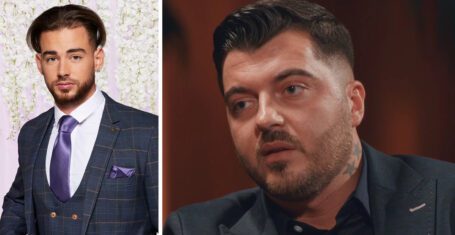
Luke has been AXED from Married at First Sight UK following physical fight with Jordan
The incident was caught on camera