

‘Alan Turing Law’ pardons gay men convicted under newly abolished anti-homosexual laws
Thousands of gay and bisexual men will receive a statutory pardon for ‘gross indecency’
 George Mathieson
Thousands of gay and bisexual men will receive a statutory pardon for previous warning or convictions of ‘gross indecency’ because of an amendment to the Policing and Criminal Bill. This development follows a commitment made by our government in 2013 when they pardoned Alan Turing, Manchester based mathematician who broke the enigma code.
Alan Turing aged 16
Alan Turing was instrumental in the success at Bletchley Park during World War 2. A brilliant mathematician whose contributions to Maths and the Second World War have has a significant impact, not just us here at Manchester but globally. Winston Churchill claimed that Turing’s work was “the single biggest contribution to the allied victory”. Turing, convicted of ‘gross indecency’ in 1952, was chemically castrated by the state in 1954 and committed suicide the same year.
Memorial statue plaque in Sackville Park
Turing’s pardon is largely due to the work of Lord Sharkey who passed a Private Member’s Bill in 2013, granting Alan Turing a ‘posthumous pardon’ nearly 60 years after his death. He marked the day as “a momentous day for thousands of families up and down the UK”. His pardon sparked a huge amount of support for further petitions hoping to pardon those persecuted and prosecuted under anti homosexual laws.
From October 2012 those prosecuted of sexual offences could apply to be cleared through a ‘disregard process’. This removed any mention of an offence from criminal record checks. However a Statutory Pardon will be granted to the 15,000 of the 65,000 convicted men who are still alive and have been through the ‘disregard process’. A pardon means that the person is absolved and forgiven for their conviction, as if it didn’t happen. Lord Sharkey said “a pardon is probably the best way of acknowledging the real harm done by the unjust and cruel homophobic laws, which thankfully we’ve now repealed. And I do hope that a lot of people will feel exactly the same way”.
Brighton Pride 2016
Whilst this pardon is to some people a great step forward, others feel that it’s still insufficient. George Montague, in an interview with the BBC last night, said “To accept a pardon means you accept that you were guilty. I was not guilty of anything. I was only guilty of being in the wrong place at the wrong time”. Unless expressly stated, a pardon does not imply innocence or that the conviction was wrongful. Montague was convicted of ‘gross indecency’ in 1974.
During the interview George Montague said “I think it was wrong to give Alan Turing – one of the heroes of my life – a pardon. What was he guilty of? He was guilty of the same as what they called me guilty of – being born only able to fall in love with another man.” His argument against accepting a pardon is that it implies that his conviction was legal and that he was guilty of a crime, Montague will not do this because there “never should have been an offence of gross indecency.” He added that “If I get an apology, I will not need a pardon.”

 Sofia Sarosh
Manchester University’s Alan Gilbert building painted orange by Just Stop Oil protesters
 Lucas Annison
The protester was arrested shortly afterwards by Greater Manchester Police

Planning application submitted for redevelopment of Fallowfield campus
 Rebecca Murphy
The plans include redevelopment of Owens Park, Woolton Hall and Oak House

Seven alternative nights out for Manchester freshers that don’t involve booze
Save your bank account and wake up fresh as a daisy

Warnings issued in Manchester after circulation of super strength MDMA pills
Drug harm reduction resource MANDRAKE has tested pills with extremely high doses of MDMA

ALIVE: Manchester’s student-run festival is back with a bang this month
 Molly Wilkinson
Come and check out over 30 student artists for the price of a pint

University of Manchester announces Nightline closure
The service provided confidential overnight support for students

Manchester students left without water for six days
Students have been advised they can shower at a gym one mile away

UCU strikes paused at Uni of Manchester after proposal from university bosses
 Anna McIvor
Four days of strike action already took place last week

Six of the most unique societies at the University of Manchester
Now that your Freshers’ wristband has expired, have a look at what else Manchester has to offer besides 256

Looking for a new society? Come and write for us at The Manchester Tab
Come to our open meeting on 26th September at 7pm!

University of Manchester has ranked 23rd in The Times Good University Guide
 Francesca Eke
The uni has risen one place since last year’s league table

Manchester freshers: This is what your choice of nightclub says about you
 Daniel Mcpherson
Don’t worry, we all thought Factory was brilliant once
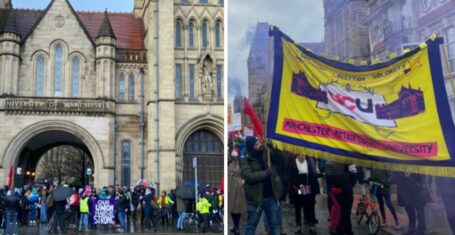
Manchester University lecturers announce strike dates for the beginning of term
The strikes will last up to nine days


‘It’s laughable’, Manchester students given £500 for not having degrees before graduation say
 Izzy Schifano
‘I’m £60k in debt with no degree to show for it’

Manchester University is giving £500 to all final years who don’t have their marks by graduation
Thanks guys but I would quite like to have my actual degree too x

From Blue 2 to Jet 2: What your summer plans as a Manchester student say about you
We’ve all met someone who’s done number seven….

Manchester students told hackers will release ‘life destroying’ data unless uni pays ransom
They also claim students can pay a ‘small fee’ to not have their data leaked

Man who killed 19-year-old Manchester Met student Luke O’Connor sentenced to 15 years
Luke was stabbed to death in Fallowfield last year after coming home from a Halloween party

A dramatic recap of the Whole Zara McDermott and Sam Thompson cheating scandal
 anotherstephen
Remember when she kept posting open love notes on Instagram to him?

Co-star romances and age-gap relationships: All of Paul Hollywood’s biggest controversies
 Lydia Spencer-Elliott
He’s back handing out handshakes on another series of The Great British Bake Off

Boo! These are officially the most haunted UK unis in 2023, based on ghost sightings
 Emily Smith
There have been 59 ghost sightings at one UK uni

MAFS gossip column: Jordan responds to fight scandal and cast knew each other before the show?!
 Hayley Soen
The drama really never ends!


Tour buses and family dramas: A brief history of One Direction’s run-ins with the law
Liam Payne has just had his driver’s license suspended


‘You’re scared to step outside’: Two women share their stories of being stalked at uni
This doesn’t only happen to celebrities like Holly Willoughby

Another one! People spot a further editing error in MAFS questioning a staged dinner
Nothing is sacred anymore

Um, the video of Georges squatting has been revealed and you absolutely have to watch it
 Ellie Ring
Give this man all the baguettes

Attention pickpocket! The uni cities where you’re most likely to have your phone stolen
I’m switching back to a Nokia brick after this

Meet Lauren Sintes: The 27-year-old model joining the cast of Made in Chelsea
Of course she’s well connected with most of the cast

Rugby boys and the cleaning rota: Just 19 uni things that are none of my business
The hygiene rating of my fave kebab shop has nothing to do with me!

From secret hookups to cheating: All the biggest bombshells from the Love Is Blind reunion
I’m in shock at all of these

Why do posh people sleep with all their mates? A very serious investigation
The Made in Chelsea mayhem has gone on long enough


‘You’ve made a c*** of yourself’: Shona shares off-screen chat that saw Brad axed from MAFS
‘Bradley said he was behaving like a caged animal’

MAFS UK star Chanita Stephenson calls out the current cast for being a ‘bit too wild!’
She thinks they’re on the show ‘for fun’ and are not ‘focusing on their marriages’

‘Go f**k yourself’: Luke calls out ‘snake’ in MAFS cast who ‘sold’ story of him having a fight
It was revealed today Luke has been removed from the show following a physical fight
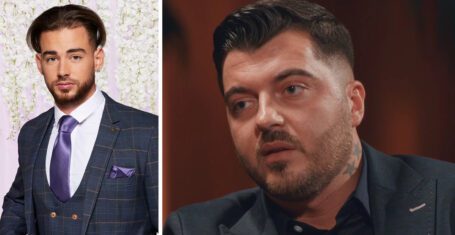
Luke has been AXED from Married at First Sight UK following physical fight with Jordan
The incident was caught on camera